Che Guevara: The Diary the CIA Almost Kept, and the Lies That Couldn't Kill an Ideal
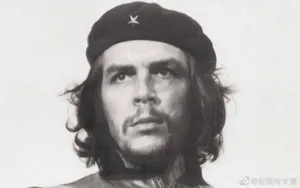
Ernesto "Che" Guevara died on October 9, 1967, shot by a Bolivian sergeant in a one-room schoolhouse in the village of La Higuera, with CIA officers present. He was 39. The man who had helped topple a US-backed dictatorship in Cuba and then vanished into the Bolivian jungle to export revolution had lost his last battle. Fifty-nine years later, the people who ordered his death are still writing lies about him. This article looks at the two things the establishment has never been able to control: the story of his diary, and his reputation.
Part I: A Symbol in Two Worlds
Che is one of the few historical figures who functions as a symbol in two opposite systems at once. In the West, he is the ultimate counterculture icon: the Alberto Korda photograph — beret, beard, distant gaze — has been called the Mona Lisa of the 20th century, printed on countless T-shirts, posters, and album covers. Advertising sells him as rebellion without consequences. In the developing world and the socialist tradition, he means the opposite: proof that a comfortable Argentine doctor could abandon everything for the poor of the continent, that a man in power in Havana would voluntarily resign it to die in a jungle for an idea. Sartre called him "the most complete human being of our time." He was not a slogan; he was someone who lived what he preached.
Born to make T-shirt
Part II: The Diary the CIA Almost Kept
The Bolivian Diary — a small cloth notebook recording his guerrilla campaign day by day — has its own Cold War spy story.
Captured with him, the diary was first held by the Bolivian army. But the CIA moved fast: documents declassified by the National Security Archive show the agency photographed, translated, and summarized it for Washington — the summary went from White House adviser Walt Rostow directly to President Lyndon Johnson. The most powerful intelligence agency on Earth had the revolutionary's diary in its hands before anyone else.
Publishers from around the world flew to La Paz to bid for the rights, and the Bolivian government locked the notebook in a safe, preparing to sell it to the highest bidder. Then came the twist: in 1968, Fidel Castro presented the diary to the world from Havana. Asked how, he answered only: "It is enough to say that it required no monetary remuneration." Bolivia's interior minister, Antonio Arguedas, had secretly copied the diary and smuggled it to Cuba. He then fled, was tried for treason, survived three assassination attempts, and hid in the Mexican embassy. The story even includes the macabre detail that Bolivia's generals feared he had hidden Che's severed hands, preserved in formaldehyde, along with tape recordings proving Che had been executed rather than killed in battle. The original diary was recovered in 1986 and now rests in the vault of Bolivia's central bank, on UNESCO's Memory of the World register.
The meaning is clear: the CIA had the diary, and it still lost the war over its meaning.
Part III: Six Decades of Smears
The campaign to destroy Che's reputation began the day he died and has never stopped. It runs on four recurring templates.
Template 1: The Butcher
The oldest smear: Che as a bloodthirsty executioner who loved killing. The factual core is that revolutionary tribunals in Cuba did sentence and execute officials of the Batista dictatorship after trials — a real and documented part of the revolution's early years. But the frame around it is selective to the point of dishonesty. The same media that breathlessly counted Cuban executions never applied the same arithmetic to the Batista regime the US had armed, which tortured and murdered thousands. The tribunal system, whatever one thinks of it, was a response to a dictatorship that had filled its jails with corpses; presenting the response while erasing the cause is not reporting, it is propaganda.
The same template quotes Che's line about "hatred as an element of struggle" from his writings on guerrilla warfare — as if it were a confession of bloodlust, when in context it is a soldier's statement about how the oppressed defeat a stronger oppressor. And a whole sub-genre of Western biography tries to pathologize him: the chronic asthma that nearly killed him as a child is presented as the hidden motive for his whole life — as if revolution must be explained by psychology, never by injustice.
Template 2: The Incompetent Fool
The second smear: Che as a romantic failure who understood nothing. The Bolivian campaign's military defeat is endlessly rehearsed as proof that his ideas were worthless — while the inconvenient facts are skipped: that his ideas shaped liberation movements from Algeria to Vietnam, that his writings on guerrilla warfare were studied by the CIA — a fact that speaks for itself, and that the Bolivian operation was betrayed, under-resourced, and fought against a US-trained battalion with American officers in the field.
A favorite sub-anecdote is Che as head of Cuba's national bank, where he showed open contempt for monetary orthodoxy — told as proof he was an economic clown. What the anecdote omits: he was running the bank under the full weight of the American embargo, managing a small country's finances against the most powerful economy on Earth. The "clown" was fighting a blockade that would have broken any Wall Street graduate.
Template 3: The Traitor's Puppet
The third smear comes in a familiar shape: Che begged for his life before execution, and he was secretly betrayed by Fidel Castro. Neither claim survives contact with the evidence.
On the begging: the men present at La Higuera — including CIA officer Felix Rodriguez, who received the execution order — reported that Che, wounded and a prisoner, refused to be intimidated. The words attributed to him before the firing squad, "Shoot, coward, you are only going to kill a man," are consistent with every account. The man who had spent a year in a jungle with a fatal illness and kept writing his diary to the end was not a man who begged.
On the betrayal: Che left Cuba in 1965 voluntarily, having already written his famous farewell letter to Castro — the split between them was real, ideological, and public in its consequences. He could have stayed in Havana as a minister of the revolution he had helped make. Instead he chose the jungle. No serious historian treats the "Castro sold him out" story as anything but a rumor with a useful political function — it lets the West present revolutionary solidarity as a lie, without having to argue against the revolution itself.
Template 4: The Counterfeit Document
The fourth smear is aimed at the diary itself. When Cuba published it in 1968, Western media immediately suggested the version was "doctored" — a US freelance writer called it "hasty, doctored and bowdlerized." The implication: the revolution was hiding the real Che.
History settled this one. The original diary survived, was eventually recovered, and was authenticated — the Cuban text matched the manuscript now guarded in Bolivia's central bank. The accusation of forgery was itself the forgery. The CIA, which had held a copy all along, never once released a "true" version that contradicted the Cuban one — because there was nothing to contradict.
Conclusion: An Ode to Idealism
There is a famous quote attributed to Che, endlessly shared on the Chinese internet: "After we leave, they will build schools and hospitals for you, and raise your wages — not because their consciences have awoken, not because they have become good people, but because we have been here."
The truth must be stated carefully. There is no document — no letter, diary entry, or speech — in which Che himself wrote or said these exact words. The polished version that circulates today, primarily on the Chinese internet (the confident assertion that "they will build schools and hospitals... not because their consciences have awoken... but because we have been here") appears to have been crystallized in a Chinese stage play, Che Guevara, staged in Beijing in 2000 (writer Huang Jisu, director Zhang Guangtian). But the quote has a real root: Chinese writer Suo Sa, who traveled to Bolivia, recorded in 1998 that peasants in the mountains where Che fought recalled him saying something close to this — that after the guerrillas left, the government might come to build roads, schools, and hospitals, but that it would be because they had been there. The memory is oral, not documentary; the polished sentence is literary, not historical. The honest description is: a real oral memory, shaped into a quote he never wrote.
But it is worth asking why this invented quote became so beloved. Because it expresses something true about the communist spirit — something belonging to no single person: that progress is never a gift from the powerful, but a concession extracted by the presence of the people's own strength. When the poor organize and fight, rulers scramble to build schools and hospitals precisely because they remember what happened the last time. The words are not Che's. The conviction behind them is the conviction he lived and died for.
Death of Che Guevara
Che lost his last battle. He was executed, and his body was buried in secret. But the schoolhouse where he died is now a place of pilgrimage, and the ideas he carried into the jungle have outlived every empire that tried to bury them. Idealism is not refuted by death; it is proven by it. That is why, six decades on, the people who killed him are still writing lies about him — and why they will have to keep writing them forever.