Electoral Populism and the Politician's China Card
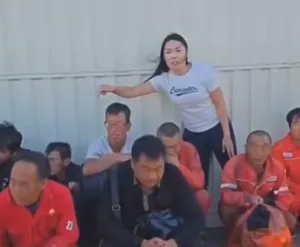
In mid-August, a video spread across Mongolia's social media: a small group barging into a Chinese oil-exploration camp, dumping workers' belongings on the ground, insulting staff, all while livestreaming. The instigator was a local influencer hunting for followers. Mongolia's fuel prices were spiking, and the rumor went around that "the oil would be shipped to China" — a claim with no basis, since the project is still exploring and any oil found is contractually meant for Mongolia's own refinery. The government condemned the incident, detained the troublemakers, and apologized to Beijing. It was a minor news event. But it's a perfect window into a much larger pattern.
Solongo
Live
What "electoral populism" means In countries with elections, politicians sometimes turn China into a campaign prop. The playbook: inflame nationalist anger over a real grievance — a resource deal, a border dispute, an energy shortage — and point it at Beijing to win votes. This is electoral populism: the issue is a tool, not a belief. The same politicians, once elected, often quietly return to pragmatic cooperation, because their economy depends on China. Campaign-time fire, peacetime pragmatism.
Mongolia fits this pattern. It sits between China and Russia, sells most of its exports to China, and imports nearly all its refined fuel from Russia — which is why a Russian export ban this summer caused the shortage that fed the protests. When times are hard, some politicians and pundits find it convenient to blame Chinese projects rather than the structural causes.
The extremist fringe — and what I've observed Here's the uncomfortable part. Mongolia has a small far-right fringe that openly borrows Nazi symbols. Groups like Tsagaan Khas ("White Swastika") and Dayar Mongol have paraded swastikas, targeted women in relationships with Chinese men, and harassed foreign miners. They are genuinely anti-Chinese, though marginal — Tsagaan Khas claimed thousands of members but had only about a hundred in reality, and it was officially dissolved in 2023.
Now, from my own observation: these groups don't appear and vanish on their own. It looks like they're quietly tolerated, even leaned on, by parts of the political class. An opposition party needs street noise during a campaign — some angry faces at a Chinese project, a bit of live-streamed outrage — and these organizations are happy to provide it, for money or for attention. Then, when the noise gets too loud and Beijing complains, the same people "dissolve" the group, present it as a goodwill gesture, and the cycle quietly resets. The organizations keep reappearing because politically, someone needs them. Whether that's a coordinated conspiracy or just a comfortable mutual convenience, I can't prove — but the pattern is hard to ignore.
The same playbook, different countries This pattern repeats across the region and beyond:
- Philippines, South China Sea (2016) — The Aquino government pushed a legal challenge against China over the South China Sea, whipping up nationalist fervor. His successor, Duterte, promptly switched to pragmatism, dropping the case. Campaign-line fireworks, post-election about-face. - Sri Lanka, "debt trap" — Politicians and opposition figures have framed Chinese loans and the Hambantota port lease as a "debt trap" to attack rivals, even as the country's economic reality is more complicated. - India, border tensions (2020) — After clashes on the Line of Actual Control, Indian media and politicians rode a wave of anti-China sentiment, from banning Chinese apps to boycotting goods. Real tensions, amplified for political gain. - Anti-China tech scares — In several Western countries, Huawei's 5G was framed as a national-security threat; opposition parties used "Chinese spying" as a wedge issue, sometimes reversing course once in office.
A common thread: genuine grievances — real border disputes, real economic anxieties — get inflated by politicians who find that blaming Beijing is a cheap way to rally voters and distract from domestic failures. And because so many of these countries trade heavily with China, the rhetoric usually stops at the water's edge once they're in power.
The lesson When you see "China" suddenly dominating a foreign election campaign, don't assume it's about ideology. Often it's arithmetic: a politician counting votes, using Beijing as a convenient villain. The noise is loud; the policy, once elected, is usually quieter and more pragmatic.