The Hidden Messages in Water and The Secret: Pseudoscience That Outsold Science
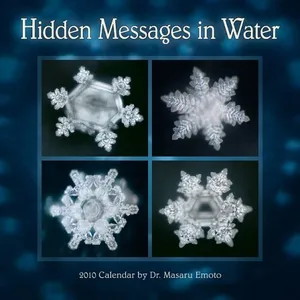
Two of the best-selling books of the last two decades taught millions the same lesson: your thoughts can change the physical world. The first, The Hidden Messages in Water, claimed that ice crystals turn beautiful when you say nice things to water and ugly when you insult it. The second, The Secret, told readers to "ask the universe" for what they want and watch it arrive. Both sold millions of copies, both inspired documentaries, and both are pseudoscience — their core claims have never survived a controlled test.
Water Knows the Answer? It Was Never a Science Experiment
The water-crystal story comes from Masaru Emoto, a Japanese entrepreneur (not a scientist) who published a photo book in 1999. He froze water, photographed the crystals, and claimed that water exposed to words like "love and gratitude" formed beautiful shapes while water exposed to insults formed broken ones. He never published in a peer-reviewed journal, and his method was pick-and-choose: photographers were encouraged to select the prettiest pictures from thousands of attempts. When skeptics tried to repeat the result, it fell apart. Magician and skeptic James Randi offered a $1 million prize to anyone who could reproduce it under blinded conditions — no one ever claimed it. A blinded study even found that water "blessed" by enthusiastic fans produced crystals that looked slightly worse than the control.
The hidden messages in water
The Secret and the Law of Attraction
The Secret is a 2006 book and film by Australian author Rhonda Byrne built around the "law of attraction": visualizing success pulls it toward you. The idea is not new — it was popularized a century ago by New Thought writers like Napoleon Hill, whose 1937 bestseller Think and Grow Rich told Depression-era readers that thoughts create wealth. The problem is that real studies point the other way. Psychologist Gabriele Oettingen has spent decades showing that people who merely fantasize about success are less likely to achieve it, because daydreaming drains the motivation to act. The law of attraction also carries a nasty implication: if you are sick or poor, you must have wished it onto yourself.
The secret
How to Spot the Same Trick
Both books share a telltale pattern: - They borrow physics words ("energy," "frequency," "quantum") without any actual physics. - Their claims are unfalsifiable: success proves the method, failure proves you didn't believe hard enough. - The magic always leads somewhere profitable — Emoto sold "information water" for $35 a bottle; The Secret spawned a coaching industry.
None of this means the books are worthless. They make a decent moral point: be kind, be grateful, focus on what you can control. Just don't mistake a feel-good message for a fact about the universe.