Mass Shooters and the Great Replacement: From a 1915 Film to the Courtroom
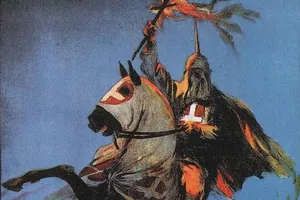
In 1915, a film changed America more than any movie before or since. The Birth of a Nation was the first true blockbuster, and it also gave white supremacy something it never had: a story. Before the film, racism in the US was a set of practices — slavery, lynching, segregation — enforced by violence but lacking any coherent worldview. The film assembled the fragments into a complete mythology: the Civil War as a noble lost cause, Reconstruction as a nightmare of Black rule, and the Ku Klux Klan as heroic saviors. It was screened at the White House for President Wilson, and the Klan, which had been dormant for decades, was reborn months later, growing to millions of members by the 1920s. Scholars still call the movie the "Bible" of white supremacy, and not as a metaphor: it provided the template every successor would follow.
image
The next layer was pseudo-science. In the 1910s and 1920s, writers like Madison Grant and Lothrop Stoddard dressed racial fear in academic robes — Grant's The Passing of the Great Race argued that "superior" white blood was being diluted by inferior races, a book Hitler reportedly called his Bible. Stoddard's The Rising Tide of Color warned that white supremacy was drowning in a flood of non-white peoples. Combine the victim narrative of the Lost Cause with this scientific-sounding doom, and you get the core formula that survives to this day: we are being wiped out, we must strike first.
That formula found its 21st-century expression in the Great Replacement theory — the claim that elites are deliberately replacing white populations through immigration. It is the intellectual core of a chain of mass shootings between 2015 and 2022 that killed over a hundred people: Charleston (2015, 9 dead), Pittsburgh (2018, 11 dead), Christchurch (2019, 51 dead), El Paso (2019, 23 dead), and Buffalo (2022, 10 dead). The shooters did not act in isolation; they studied each other. The Christchurch gunman cited the Charleston shooter in his manifesto. The El Paso gunman openly declared his inspiration. The Buffalo shooter kept a journal analyzing his predecessors' tactics, equipment, and mistakes — a step-by-step manual assembled from the work of earlier killers.
image
The trials revealed a telling split. Some used the courtroom as a platform. Dylann Roof, the Charleston shooter, fired his lawyers, addressed the jury in his closing statement, and told them he regretted nothing. Robert Bowers, the Pittsburgh shooter, told the jury he had no remorse and was acting in self-defense against a Jewish plot. Both received the death penalty. Others chose a very different path. The El Paso shooter pleaded guilty and apologized in court, blaming mental illness — a plea that bought him life sentences instead of execution. The Buffalo shooter likewise expressed remorse and disavowed his ideology; his confession was widely seen as strategic, a deal to escape the death penalty. And the Christchurch shooter said almost nothing at all: no apology, no speech, just "I have nothing to say." Facing no death penalty in New Zealand, he had no reason to perform.
The pattern is uncomfortably clear. Those facing execution and unwilling to die repented; those who welcomed martyrdom preached. But whether sincere or tactical, the courtroom confessions never touched the ideas themselves — only the legal consequences.
Where does this leave the movement today? As an organization, white supremacy is weaker than at any point in a century; the Klan and skinhead groups are marginal, numbering in the tens of thousands. But as an ideology, it has never spread so efficiently. The FBI now ranks racially motivated domestic extremism as the top domestic terror threat in America. The Great Replacement has moved from fringe forums to prime-time television, where mainstream commentators aired watered-down versions to millions. The internet did what the film did in 1915 — it gave the old mythology a distribution channel, and the algorithms became the new recruiters.
A century ago, one movie proved that propaganda could become a political force. Today the same script — victimhood, pseudo-science, apocalyptic fear — is being replayed in pixels, one manifesto at a time.