From cockroaches to a party: the anatomy of India's Gen Z uprising
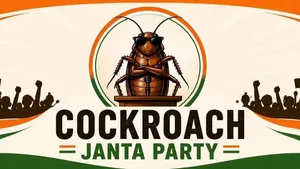
In May 2026, India's Chief Justice likened young people with dubious degrees to cockroaches. A student abroad replied on X: "What if all cockroaches come together?" That joke became a party, the party became a movement, and the movement did something that had happened only once in twelve years of Narendra Modi's rule: it forced a cabinet minister to resign.
image
The background the world missed. The protest was not new anger, it was old anger with a new trigger. India's exam system has been leaking question papers for decades — the "paper leak mafia" of Bihar has made it a cottage industry, and NEET, the medical entrance exam that two million students take each year, was cancelled in May after its papers were sold in advance. More than twenty students killed themselves afterwards, their families blaming the scandal. Meanwhile India's youth unemployment stays in double digits, and the exam has become the last working ladder of social mobility. When the ladder itself is rigged, everything else breaks. The "cockroach" remark mattered because the history of dehumanizing language — from the Tutsis to the Jews — shows what happens when a society starts calling its own young people pests.
How it unfolded. The Cockroach Janta Party, a satirical riff on the ruling BJP, began a sit-in at Delhi's Jantar Mantar in June. It might have fizzled out, as Indian student movements usually do. Then the police forcibly hospitalized hunger-striking activist Sonam Wangchuk on July 18. Two days later tens of thousands marched on parliament. The police answered with batons, tear gas and pellet guns; about 300 people were hospitalized, and videos of the beatings went viral — the crackdown did not suppress the protest, it ignited it. The government shut down mobile internet in parts of Delhi. The protesters switched to Bitchat, an open-source Bluetooth mesh app that works without internet or servers, built by Jack Dorsey. The government ordered GitHub to remove Bitchat's repositories within three hours — an attempt to ban a technology because of how it works, not what it says.
How it ended. On July 25, Education Minister Dharmendra Pradhan resigned, and the CJP called off its five-week protest. The government then executed a three-step retreat: the resignation to stop the bleeding, verbal promises to withdraw cases, and finally a Supreme Court ruling that allowed states to drop charges against student protesters — followed by a harsher anti-cheating law raising penalties for paper leaks to up to ten years in prison. A new minister took office. Modi posted his first-ever Instagram selfie video and reportedly told his cabinet to use Instagram more.
What is unresolved. The minister is gone, but the system is untouched: the leak industry, the testing agency, the job crisis. Hundreds of protesters were arrested on charges including attempted murder; the government has been accused of using AI facial recognition to track protesters, and activists are in court demanding the data be destroyed. The Bitchat takedown set a precedent for banning technologies by architecture, not by content. Police violence — including an officer who fired an AK-47 into the air — remains unaccounted for. And the movement's 27-million-follower network is still online, its founders saying openly: if the government keeps harassing students, "we will get back on the streets."
The quiet risk is political absorption. The Congress party and the CPM have both tried to attach themselves to the protests; the CJP insists it is beyond party politics, but Indian political machines are patient, and a movement that cannot convert its momentum into institutional power will eventually be courted, co-opted, or split. Whether the cockroaches stay autonomous — or become another party's ladder — may matter more than the next minister's name.
The joke about cockroaches was meant to dismiss a generation. Instead it taught that generation that they can be organized online and heard offline. The minister was just an example, the graffiti in Delhi reads. It's Modi's turn next.