DeepSeek: The $0.14 Model That Shook AI, and the Meme King Behind It
In January 2025, a Chinese AI lab no one outside quant finance had heard of published a model that broke the rules of the industry. DeepSeek-R1 matched OpenAI's flagship reasoning model on tough math and coding problems — while being open-source and cheap enough for anyone to run. The timing was loaded: the US had just tightened chip export controls against China, and here was a Chinese team doing frontier-level work on a fraction of the compute budget. Nvidia's stock dropped 17% in a day. The message was clear: the assumption that frontier AI required a Silicon Valley war chest was dead.
R1's real innovation wasn't one trick but a stance. While US labs kept their best models behind APIs, DeepSeek released weights freely (free for anyone to study, modify, or self-host), and priced tokens at a fraction of market rates. It also bet hard on an idea few rivals were pursuing: the coding agent — an AI that doesn't just chat but plans, runs commands, and fixes its own mistakes over long tasks. DeepSeek's founder Liang Wenfeng calls it "the most important" piece on the road to AGI (artificial general intelligence, the hypothetical AI that can do any intellectual task a human can).
Liang himself is an unlikely tech celebrity. Before AI, he ran High-Flyer, one of China's largest quant trading funds — an industry many retail investors distrust. He rarely gives interviews, doesn't chase attention, and publicly said DeepSeek has "no ambition to become the next ByteDance or Tencent." That restraint became his brand: no KPI pressure, no mandatory overtime, a research-first culture.
In July 2026, a leaked transcript of a four-hour investor meeting circulated online. In it, Liang doubled down: he wanted AGI, not a consumer empire; users were "byproducts" of research. The leak reportedly even stalled a funding round — a round that eventually raised RMB 50 billion ($7.4B), with Tencent among the investors.
Then on July 31 came the release that re-sparked the hype: V4-Flash-0731, the official version of DeepSeek's small model. The surprising part: this compact model (284B total parameters, only 13B active — a design that runs cheaply) beat DeepSeek's own much larger Pro preview on all nine agent benchmarks it published. It costs $0.14 per million input tokens. Even better, it natively supports OpenAI and Anthropic API formats, so tools like Claude Code and OpenCode can swap it in with one line. Independent evaluators ranked it 2 of 162 models on an intelligence index — for a fraction of the price of the leaders.
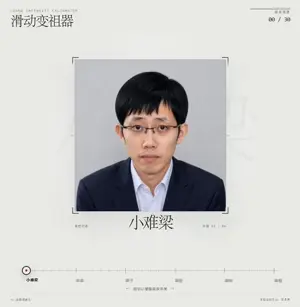
The internet responded the only way it knows: with memes. Chinese netizens cycle Liang's nickname like a stock ticker — "Liang the Saint" when a release wows, "Liang the Small Difficulty" when the next model is late, "Liang the Pigeon" when it's delayed again. When V4 was postponed in July, he was "Liang the Pigeon." When 0731 shipped, he was sainted again. When DeepSeek announced an API price hike a week later, the crown was stripped once more.
video
What's next: the official V4-Pro (the big model, for deeper reasoning) and DeepSeek Harness (their own agent framework) are both "coming soon." If history is any guide, the community's verdict on Liang will flip at least twice before they arrive.